Every wholesale buyer eventually asks the same question: should the line lean tungsten carbide or grade-5 titanium? The honest answer is both — but in different roles. Here is how our export customers split them.
01Hardness first: why tungsten owns the display case
Tungsten carbide rates 9 on the Mohs scale. In practice that means a mirror polish that survives years of daily wear without the micro-scratches that dull steel and gold-plated bands. For retailers, that translates into a product that still looks new in the display case after handling — and an essentially zero return rate for 'looks worn' complaints.
02Where titanium wins: weight, skin and price
Titanium wins on weight and skin-friendliness. A grade-5 titanium band runs roughly 40% lighter than steel, which customers notice within the first hour of wear. It is also the safe recommendation for people with nickel sensitivities, and its lower material cost leaves room for more aggressive retail pricing.
03The 60 / 30 / 10 opening order
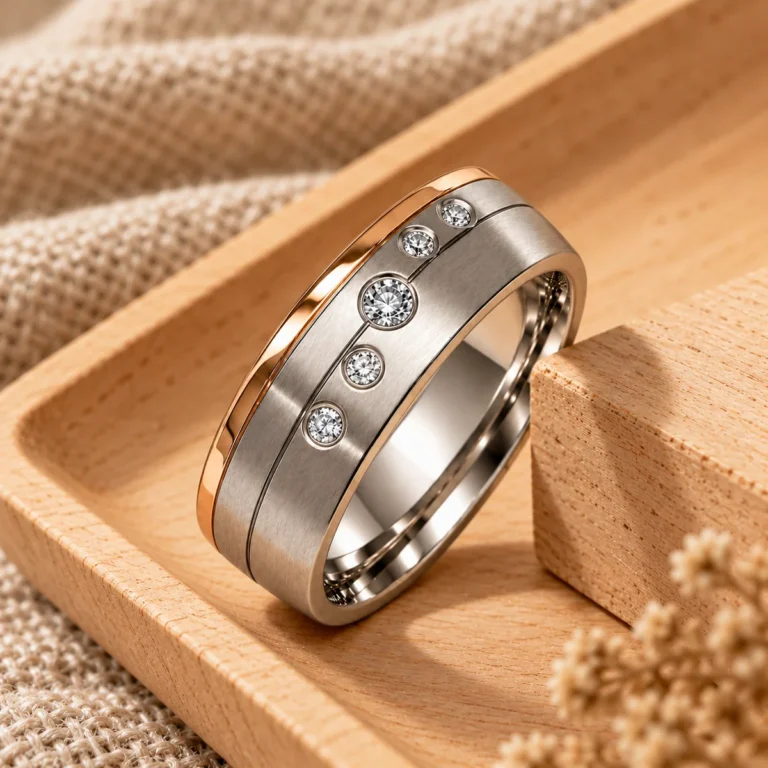
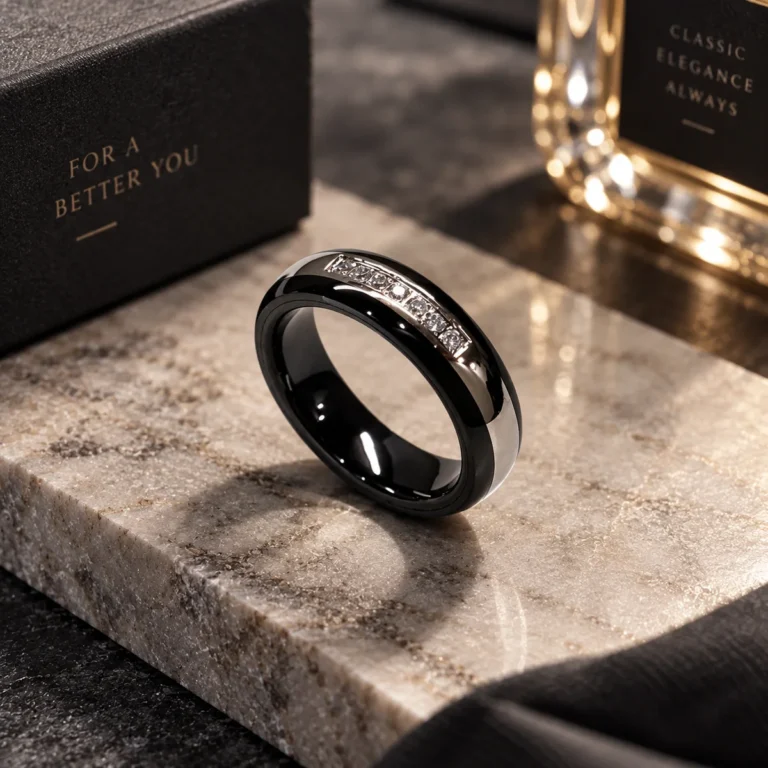
A balanced opening order we see repeatedly: about 60% tungsten (inlay and diamond styles carry the margin), 30% titanium (everyday plain and channel-set bands), 10% statement pieces for the window. Sizes #7–#13 with half sizes cover the vast majority of demand in North America and Europe.
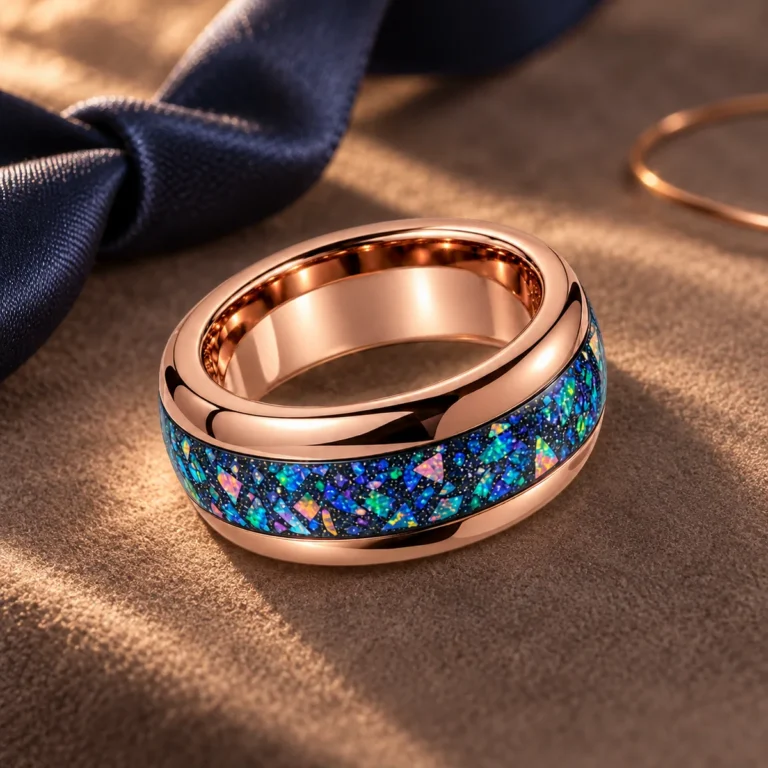
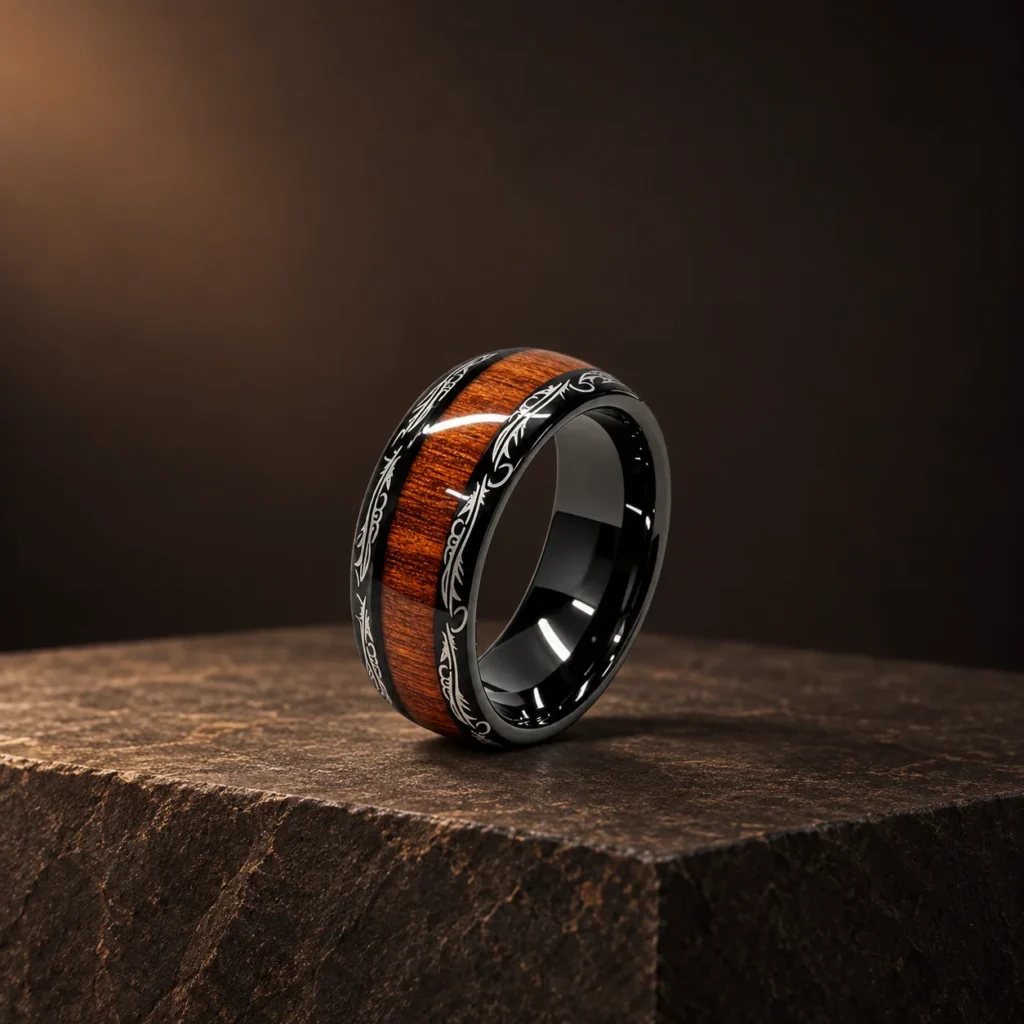
Whichever metal leads, the inlay story is what lifts basket size. Wood, opal, carbon fiber and meteorite-pattern inlays photograph well, differentiate from commodity bands, and hold a 2–3× price premium over plain styles at similar MOQ.