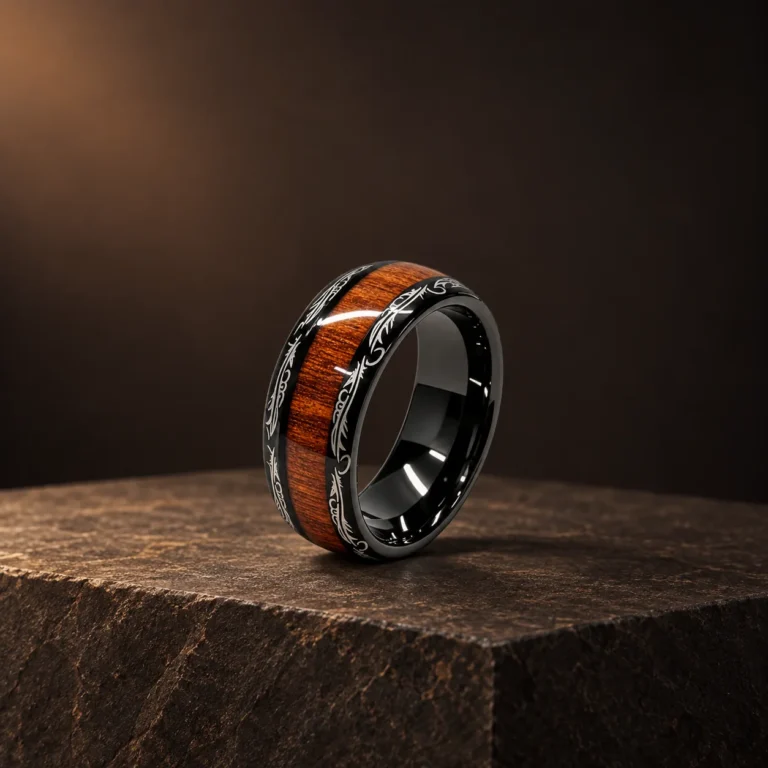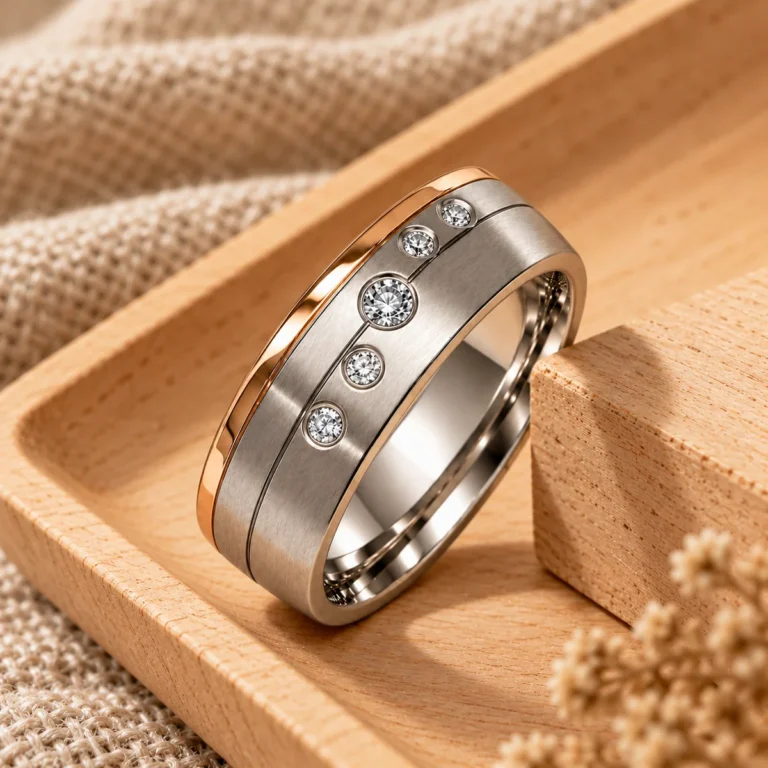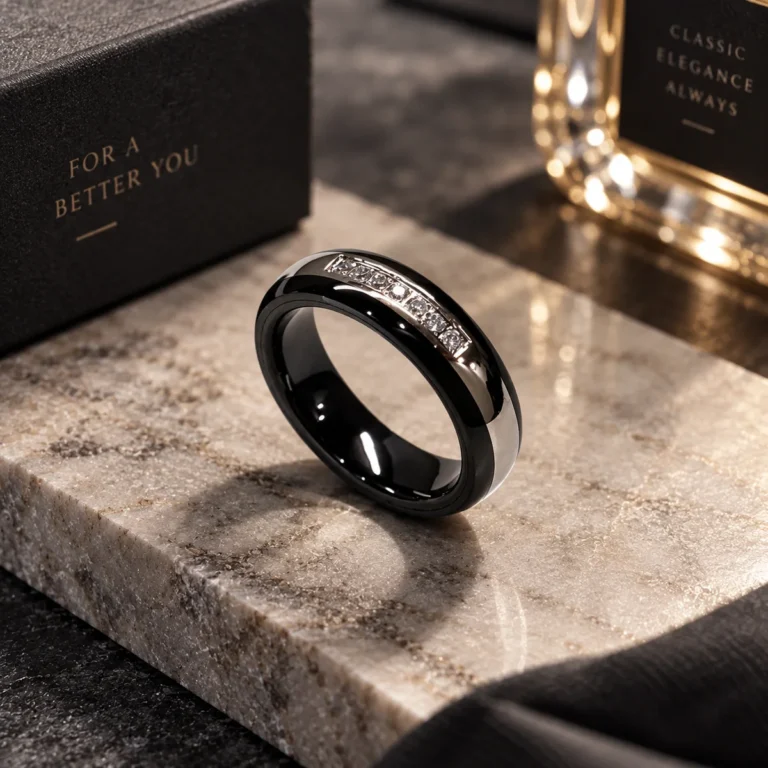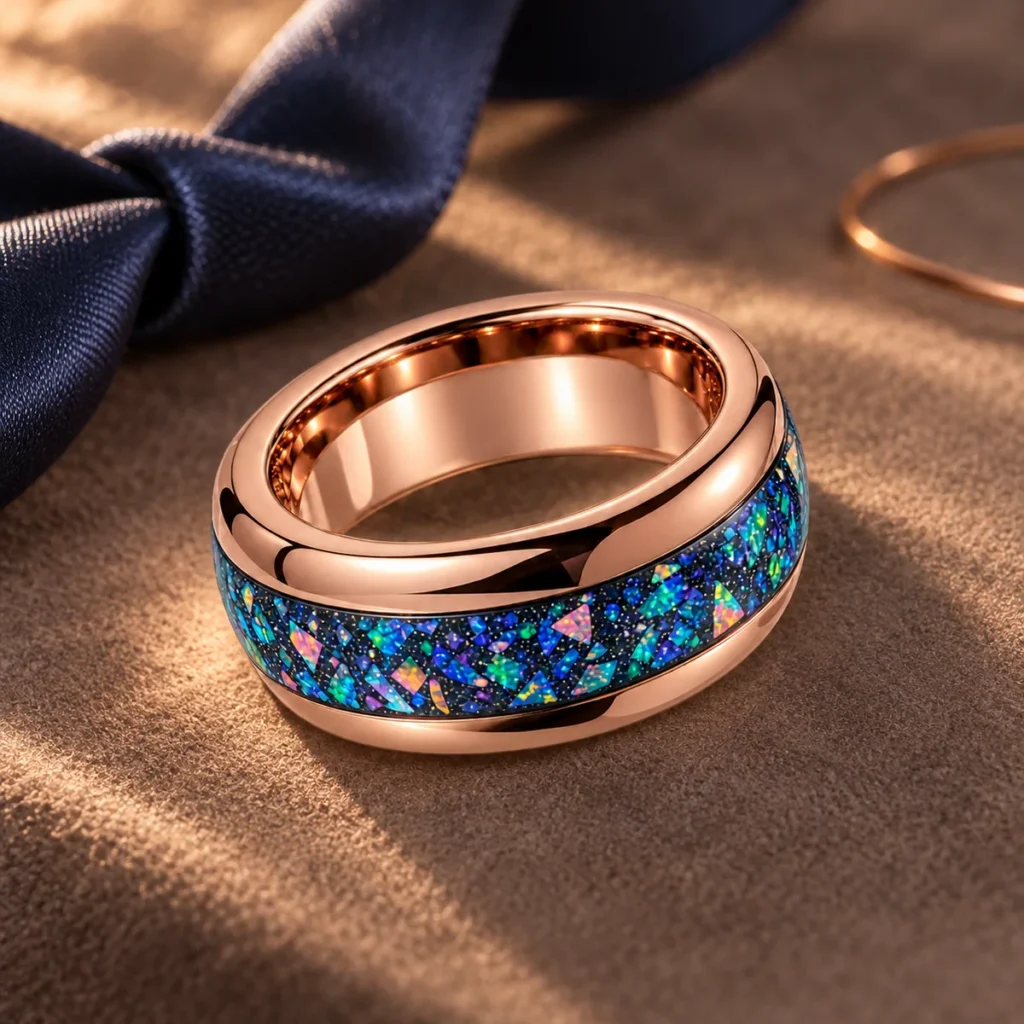
Opal is the most requested inlay in our catalog and the one buyers ask the most questions about. This is exactly what happens at the bench — useful for your product pages and customer service scripts.
01Cutting and setting the channel
Each channel is cut into the sintered tungsten carbide body by CNC, then the opal chip is graded by colour flash and hand-set in sections. Setting by hand is what keeps the pattern continuous around the band; machine-placed chip tends to band and repeat visibly.
02Sealing and polishing
After setting, the inlay is sealed with a jeweller-grade resin and cured, then the whole ring is polished to its final finish. The seal protects the opal from moisture and cosmetics — the two things that dull raw opal over time.
03Care notes you can pass to customers
Care guidance you can pass straight to customers: wipe with a soft damp cloth, avoid ultrasonic cleaners and prolonged soaking, and remove the ring for heavy gym or pool sessions. Handled this way, a sealed opal inlay keeps its flash for years of daily wear.
04Inspection before packing
Every finished ring leaves the bench only after inspection under 10× magnification — inlay seams, seal clarity and polish are all checked before packing. That is why opal styles ship with the same 48-hour sample lead time as plain bands.